Getting Your Left and Right Hands to Work Together
Dec 31, 2025
Tell me if you've ever run into this problem: you're practicing a lick or a riff over and over again and no matter what you do it still sounds sloppy. You've tried slowing it down only to have it trainwreck at full speed.
If this sounds familiar, you're not alone. And if you're self-taught it can be worse because it may not be obvious where to look for the problem. In my experience, the most likely culprit is poor hand synchronization.
Playing an instrument is difficult. And even though guitar seems easier than many, it has it's own challenges. Not the least of which is having to choose a note with one hand while you sound it with the other. If those two motions don't happen at the exact same time it sounds like crap.
Fortunately, the solution is simple if time consuming. All that's needed is to work on some simple exercises in a specific manner. Just follow the steps and give the exercises time to work their magic. So grab you're guitar and let's get into it.
You can download the PDF of the full exercises here.
This is an exercise I learned early on in my lessons and there’s a lot you can do with it. It's often called the "spider" exercise. If you’re not familiar with it, it looks like this:
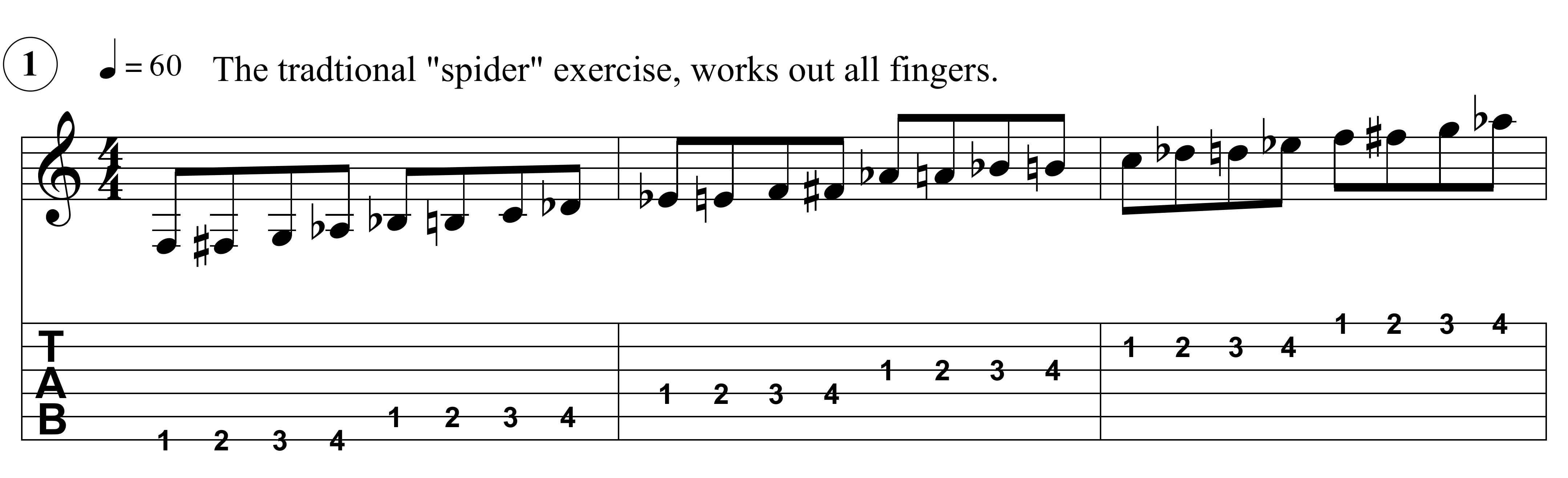
The beauty of this exercise is that it’s simple. If you take it slowly, it allows you to focus on getting each note to sound clearly.
To make the most out of the synchronization, switch your fretting fingers and attack the string with the pick at the same time. This creates the sound of each note butting right up against the next instead of hearing a marked silence between them. This is especially difficult when switching strings so be patient.
These next exercises become increasingly more difficult. In this one, we're going to provide a little extra workout for the first and second fingers by alternating them for two beats before we ascend the other frets. Check this out:
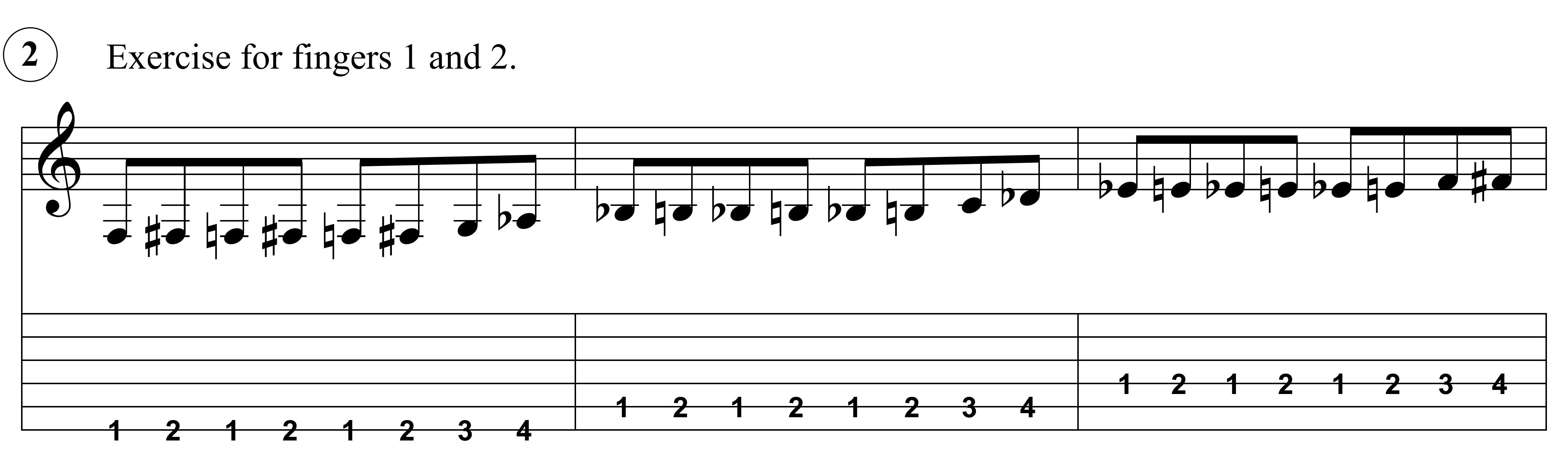
Just like the previous exercise, you're going to want to connect the notes. The switching of your fret hand fingers and your pick hand attack need to happen simultaneously.
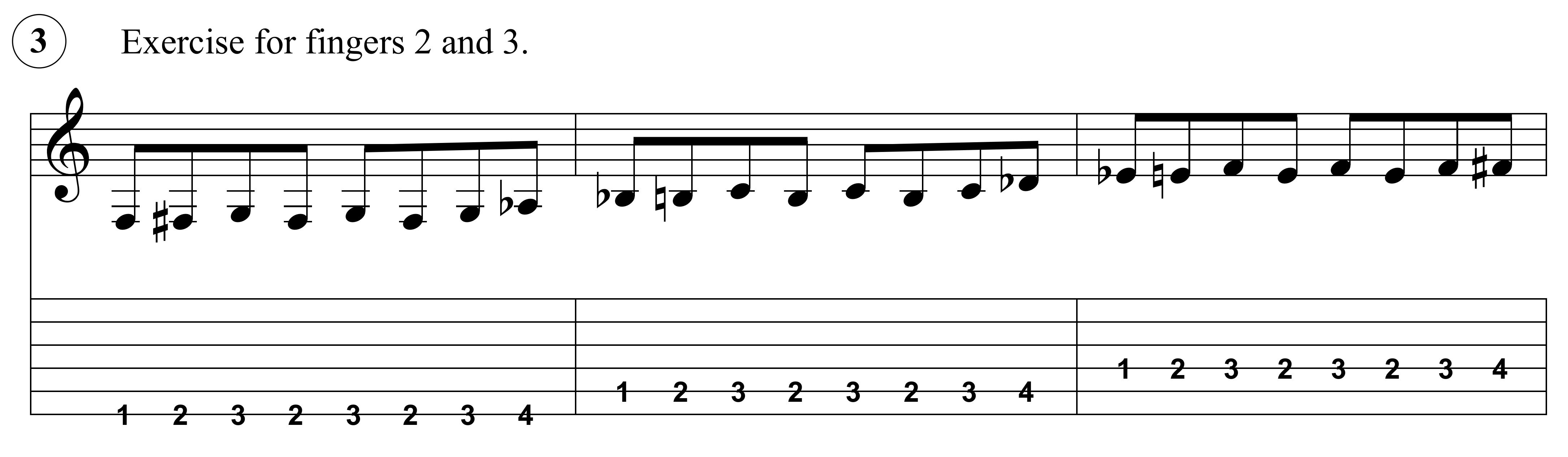
Only two more exercises and this one will focus on the second and third fingers. This coordination is a bit trickier than it is with the first two fingers so it may take a little more time to get right.
And here's the last exercise, featuring an alternation between fingers three and four at the end of each bar. This is by far the hardest of the four exercises but SO worth it. Most self-taught guitar players have trouble getting their pinky to work efficiently and this exercise will help with that.
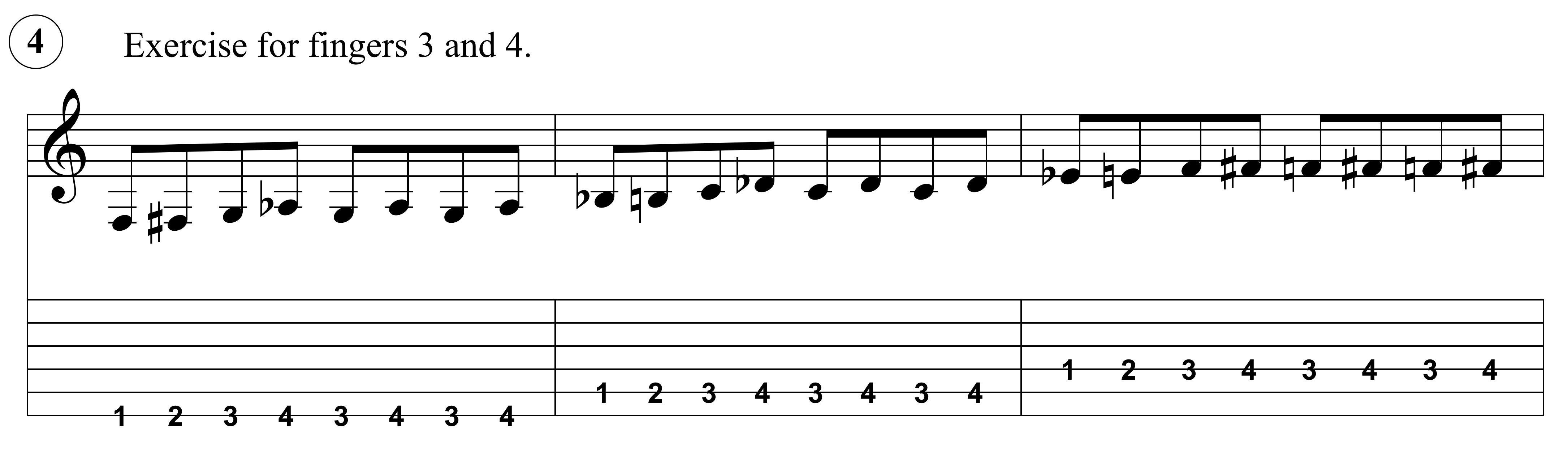
In addition to concentrating on the synchronization, you'll want to follow these steps to get the most from the exercises.
- Sit with good posture, as described on my Guide to Sitting With the Guitar. It may sound lame but it really helps with everything when playing the guitar.
- Decide on a picking pattern. You may want to choose alternate picking or all downstrokes. Whatever it is, BE CONSISTENT throughout the exercise.
- Frets equal fingerings. In these exercises, each fret on the TAB equals a finger on the fret hand, with fret 1 equalling your pointer finger, and fret 4 equalling your pinky. It's important that you follow this fingering precisely to get the best results.
- Play with as little effort as possible. For the fret hand, use only the amount of pressure needed to generate a good sound out of each note without buzzing. You don't need to press hard on the strings. For the pick hand, strike the string deliberately enough to generate a good sound, but relax the arm so you don't hit the strings too hard. These should be all be relaxed motions.
- Continue up the neck and back down. Once you've completed an exercise, shift your fret hand up one fret and repeat the same exercise. Continue this way to the twelfth fret then reverse the process. Do this for all the exercises.
- Gradually increase the tempo. When you've mastered each exercise, increase the tempo by ten points and repeat. Continue this way until you can perform all of the exercises at 120 BPM.
If this sounds like a lot of work... it is. BUT! You don't need to do it all at once. Practice each of these exercises a little bit each day and then take what you discover to your favorite riffs. You'll start to see improvement in your playing very quickly.
And remember to download the full version of these exercises by clicking the button below. Now go practice and I'll talk to you soon.
Kevin