Pentatonic Scales for Soloing: Why Fewer Notes Often Sound Better
Feb 09, 2026
We’ve all been there. You get comfortable soloing with the minor pentatonic scale, start to sound decent, and then decide it’s time to “level up.” So you learn the major scale. Maybe the natural minor too. You take them for a spin… and somehow your solos sound worse, not better.
What gives? More notes should mean more color, right?
Not necessarily.
The magic of the minor pentatonic scale—and its relative scale, the major pentatonic—is that it strikes a perfect balance between steps and skips. That balance is what keeps your lines musical instead of sounding like scale exercises.
The minor pentatonic scale is essentially a natural minor scale (the aeolian mode, if you prefer) with the second and sixth scale degrees removed.
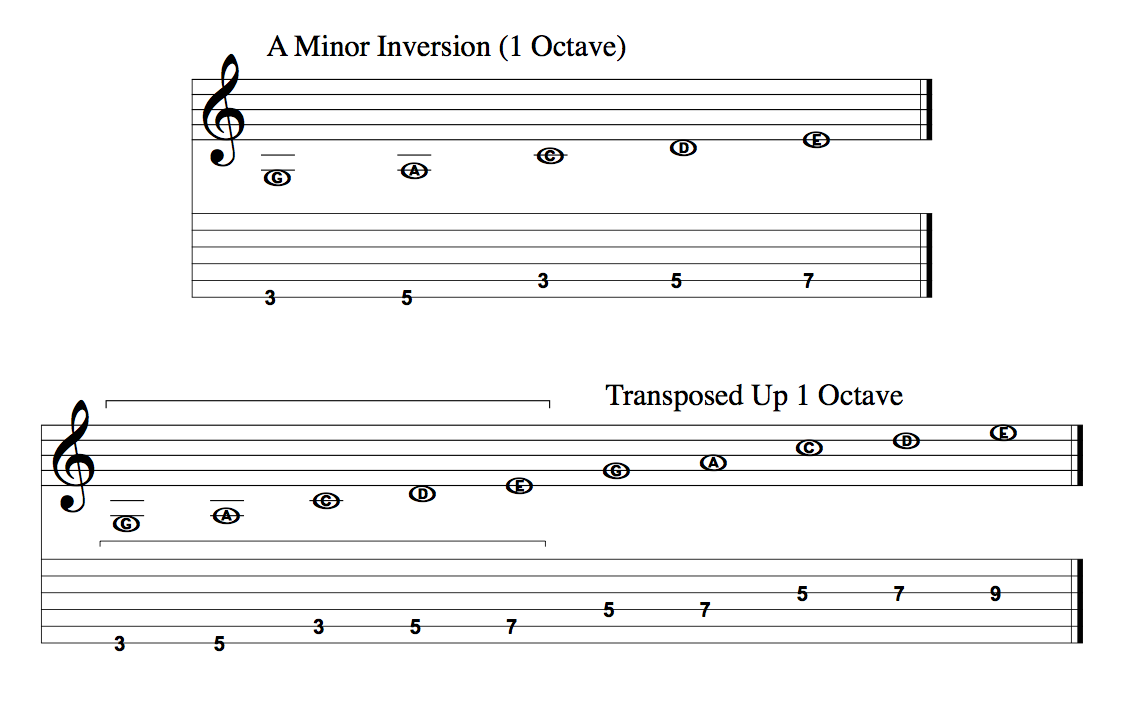
Let’s look at this in A minor. The A minor scale contains the notes A, B, C, D, E, F, and G. The A minor pentatonic scale pares that down to A, C, D, E, and G.
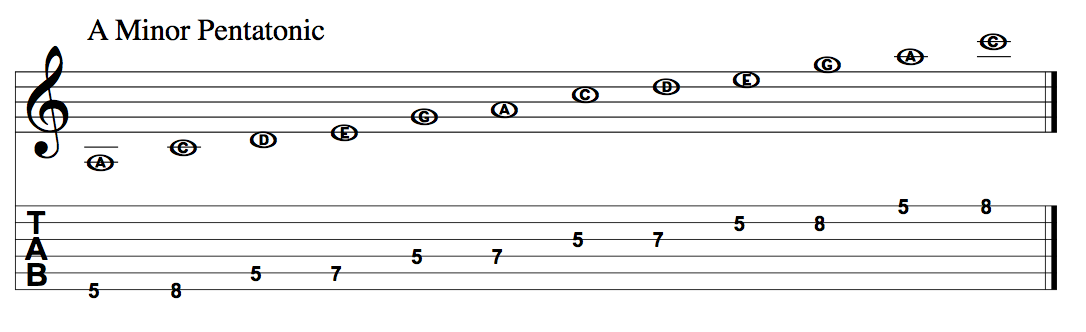
By removing the B and the F, what you’re left with is basically an Am7 chord, plus a passing tone between the minor third and the fifth (the D). In other words, when you play the A minor pentatonic scale, you’re largely outlining an A minor arpeggio without even trying.
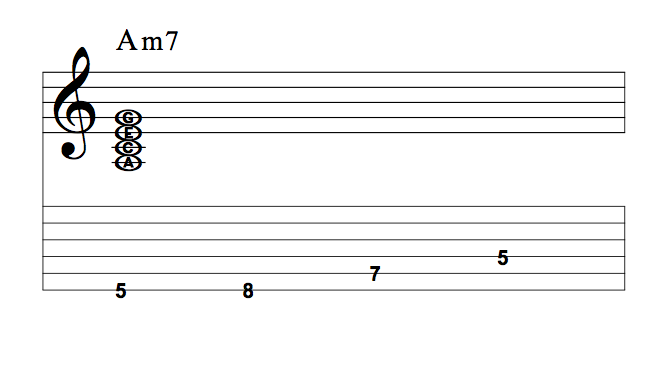
Now here’s where it gets interesting.
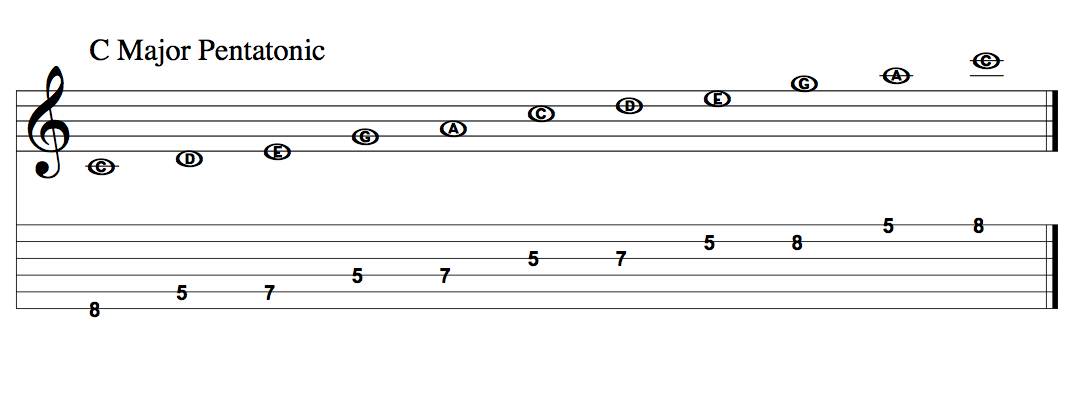
If you start that same collection of notes on C instead of A, you get a C major pentatonic scale: C, D, E, G, and A. Those notes spell out a C6 chord, again with the D acting as a passing tone.
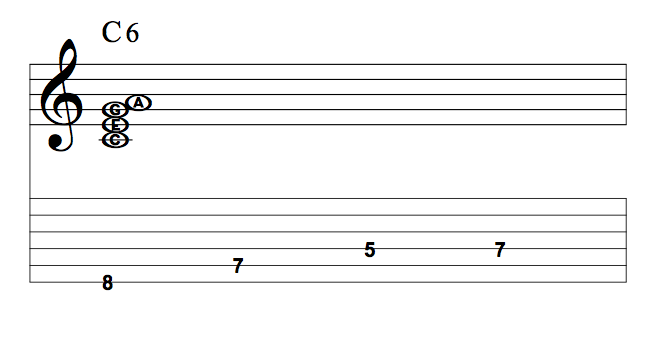
This built-in harmony is one reason pentatonic scales sound so good so quickly.
Traditionally, pentatonic scale fingerings stretch across three strings before reaching the next octave, which can make it harder to see where you are on the fretboard. But with a small rearrangement of the notes, you can play a complete one-octave pentatonic scale on just two strings. That alone makes the scale easier to visualize and use melodically.
The same idea applies to the major pentatonic.
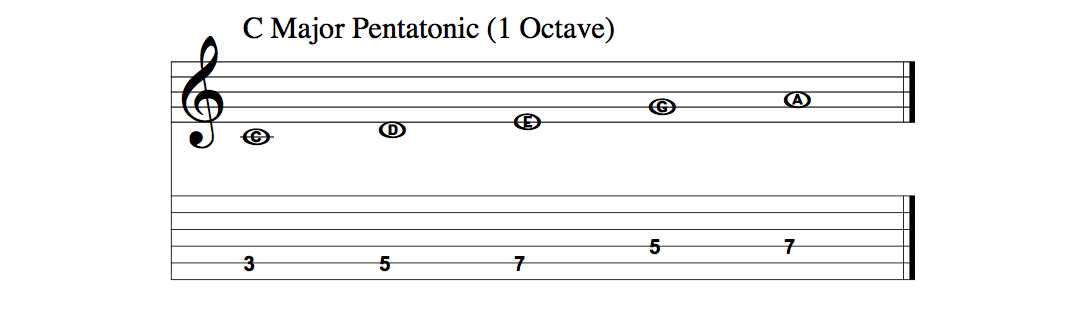
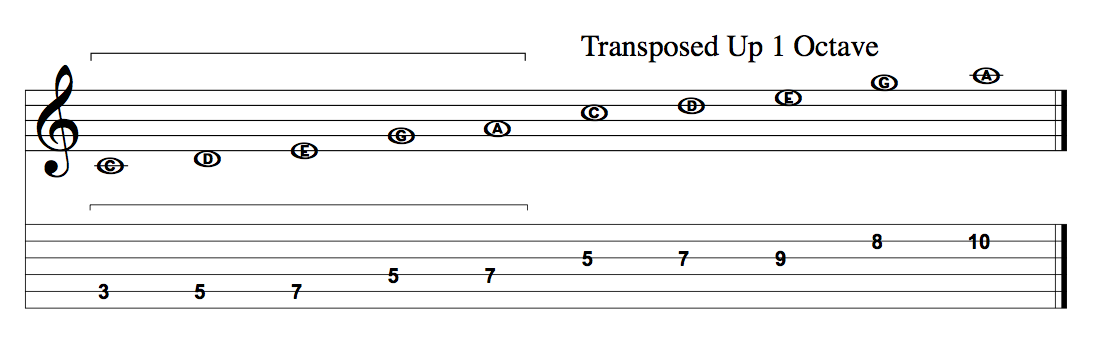
You’ll notice that the minor and major pentatonic patterns are virtually identical. That means the same fingering can work over both A minor and C major, depending on the musical context.
Take this a step further and things really open up. Use a D minor pentatonic scale and you can solo over both D minor and F major chords. Do the same with an E minor pentatonic scale and it works over E minor and G major.
Suddenly, you can move through pentatonic scales to solo over nearly every chord in the key—C major or A minor, in this case.
Because you’re switching pentatonic centers instead of running full major or minor scales, your solos gain more color without sounding busy or forced. They also sound less “scaley,” thanks to the arpeggio shapes baked right into the pentatonic fingerings.
So grab the PDF, experiment with these ideas, and have some fun. You may find that the fastest way to sound more musical isn’t adding notes—it’s choosing better ones.