Using the Major Scale to Learn the Neck
Jan 12, 2026
We musicians are always told we need to "learn scales". But why? There are many reasons but the one I want to share today is how you can use the scale to learn the neck. You can download a PDF of this lesson here. The first question we need answered is, "what's a scale?"
A scale is simply a collection of notes arranged in stepwise order--one note after another. While any number of notes arranged in this manner may be considered a scale, the term is generally reserved for collections of five or more.
The Major Scale, has been the central structure of western music for centuries and is composed of five whole steps and two half steps. A half step is a distance of one fret, and a whole step is two frets.
Scales are named for the first note in the collection. Below is the C Major scale including the combination of whole steps and half steps used in its construction. You could call this combination the formula for the major scale.
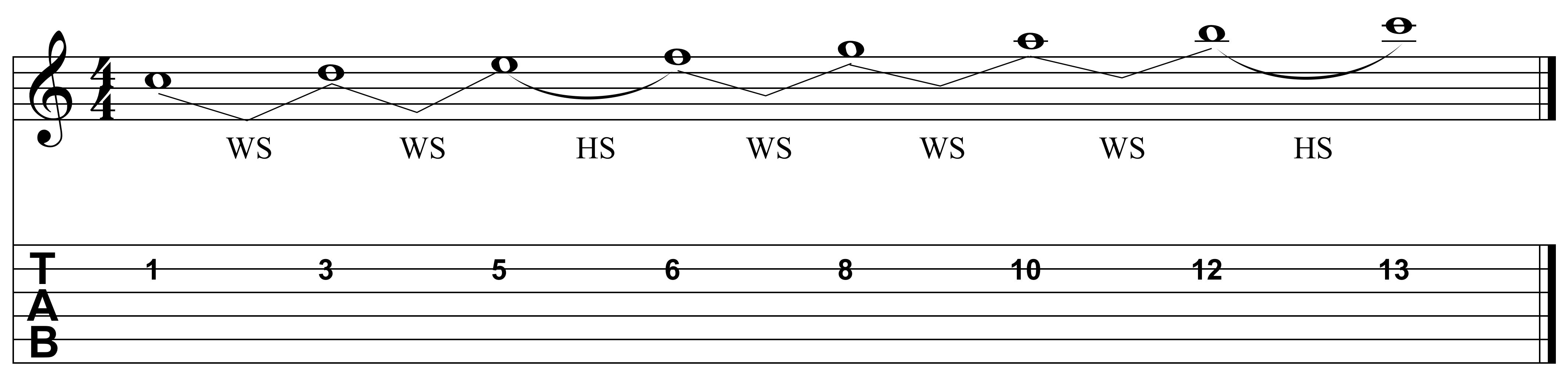
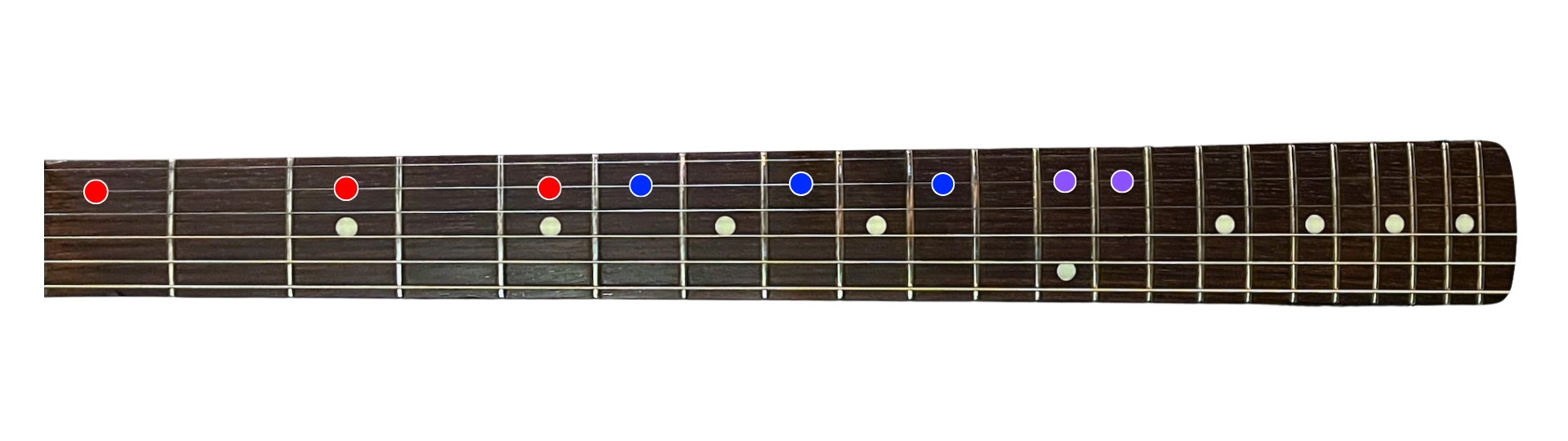
As you can see, this orientation lays out really well on the B string. If you want to practice the scale like this, I recommend using the color codes to tell you when to switch positions. Play the red notes first with fingers 1, 2, and 4, then switch to play the blue notes in the same way. The last two notes can be played with the first two fingers. Simply reverse the fingering for the descending version.
Tip: Apply the letter names to those frets (C, D, E, F, G, A, B, C) and you've now learned the natural notes on the B string.
That orientation of the scale won't be practical in all situations, of course (though it does sound cool to play a solo on one string like that. It allows for some interesting phrasing when sliding from note to note). Fortunately, the guitar is laid out so you can also put these notes closer together.
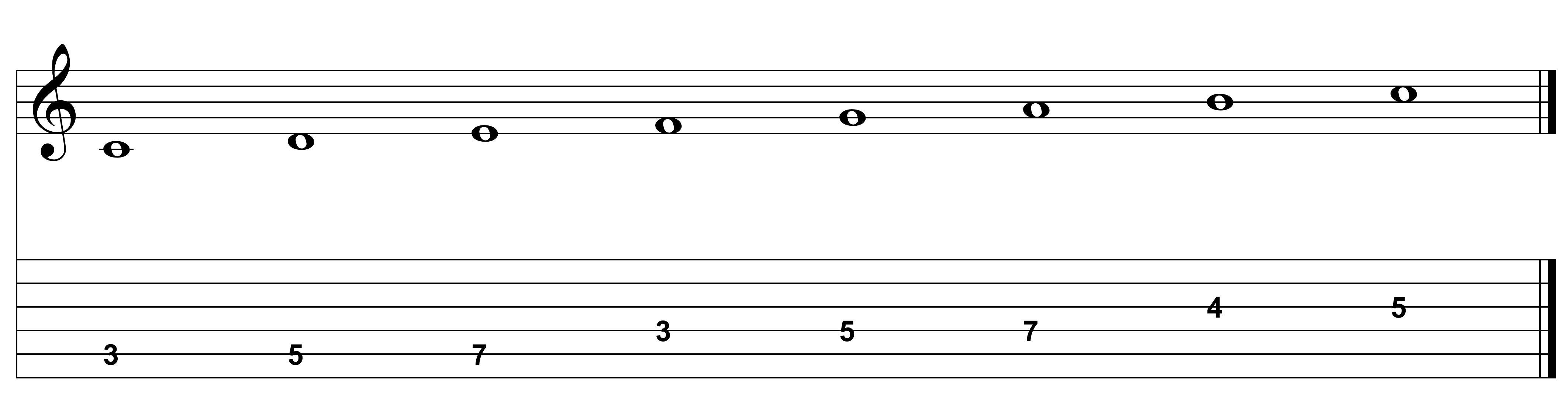
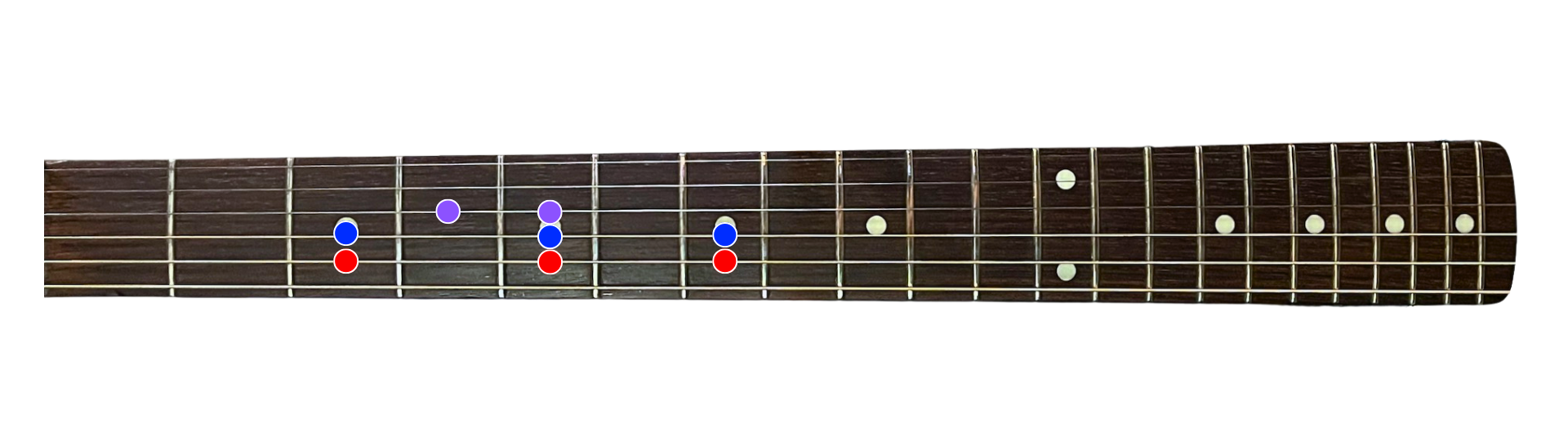
This orientation of the C Major scale is one octave lower, but notice how the notes line up--most of them are right on top of each other. And if you follow the same fingering as in the previous example, it's very easy to play.
Tip: One of the most important things you can do when practicing is listening. Listen to each segment of the scale and compare and contrast them.
Bonus Tip: Play the major scale along the A string, starting at the 3rd fret (as above) and you'll learn the natural notes on that string as well.
With this formula, you can build the C Major scale anywhere there is a C. And if you do take the step of memorizing the letter names for each note in the scale (C, D, E, F, G, A, B, C), you'll learn where all your natural notes are all over the neck.
You can also use this same formula to build the scale on any note. This can be an excellent way to warm up before practicing a song. Let's say your song is in the key of G Major. Using this formula, build the G Major scale and perform it several times. Make note (haha!) of the sound of the whole steps versus the half steps. Get the sound of the scale in your ear. Sometimes writers will use notes and chords that aren't in the key, so when you play the song see if there any that sound "out".
This was actually my favorite way to learn the neck because it made the process practical and musical. Playing a scale along the string helped me see the formula. And playing it "stacked" across the strings helped find the note redundancies quicker.
So take your time, stick with it, and you'll master the neck efore you know it! Remember to download the PDF by clicking the button below.