Pentatonic Scales Over Chord Changes: How to Make Your Solos Follow the Harmony
Feb 16, 2026
In a previous lesson, we looked at why the pentatonic scale is one of the most powerful tools for soloing. If you remember, the big idea was this: a pentatonic scale is essentially an arpeggio with a passing tone. Because of that built-in harmony, both the major and minor pentatonic scales can work over most chords in a key (with diminished chords being a special case).
Now it’s time to put that concept into action.
In this lesson, we’ll focus on how to move pentatonic shapes so your solo actually follows the chord progression. I’ve also included audio examples so you can hear how this sounds in a real musical setting.
The first step is learning to shift the major and minor pentatonic patterns so they line up with each chord. For demonstration, we’ll use the classic I–vi–IV–V progression.
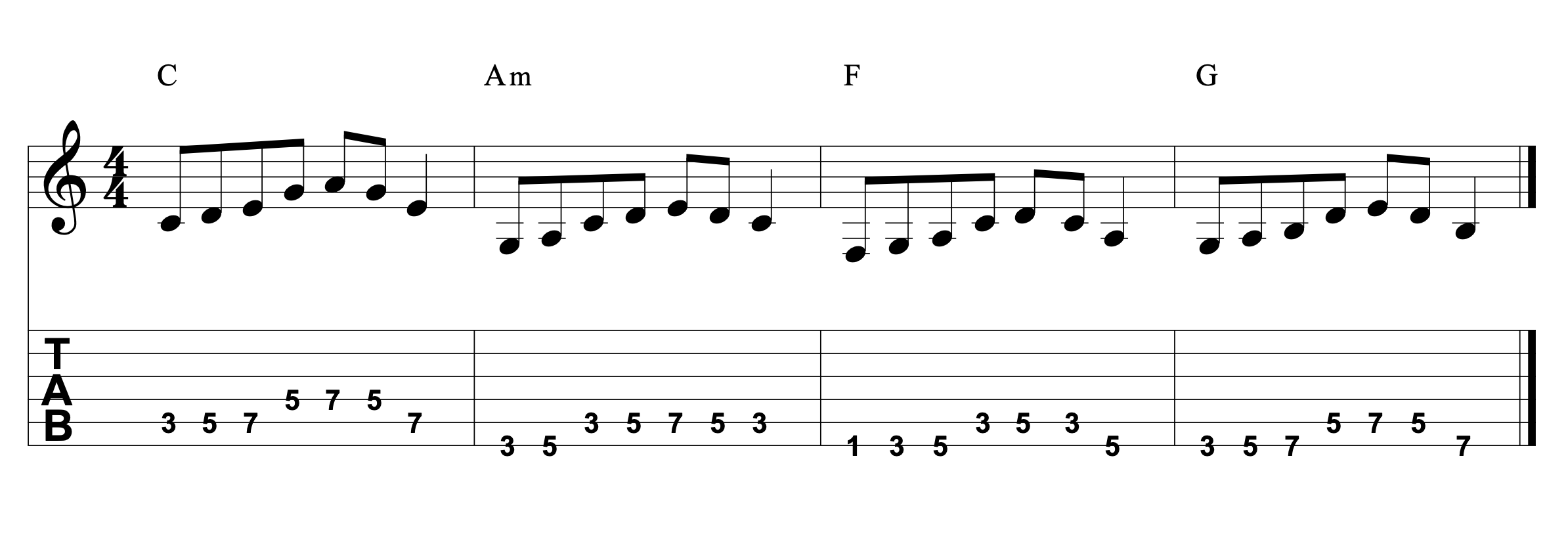 I’ve shown this in the lower register of the guitar because it’s where most players first learn their pentatonic shapes. It’s familiar territory. But in real playing situations, you won’t want to stay there.
So let’s move the same idea up an octave.
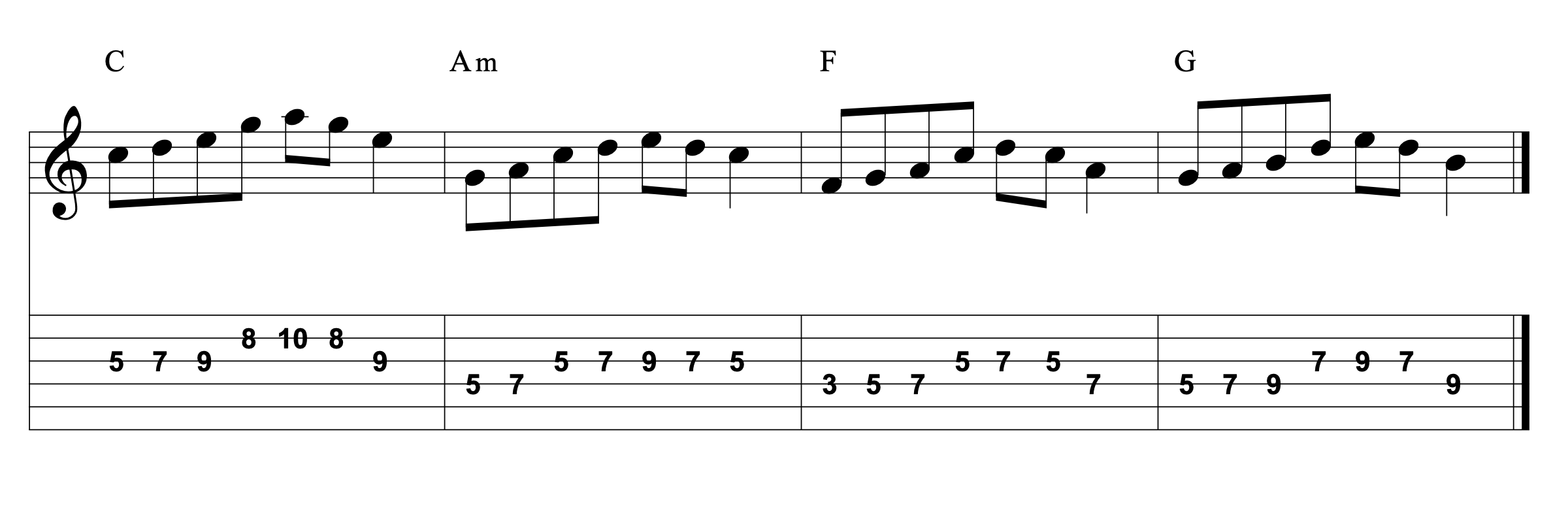
Notice how this register tends to sit more clearly on top of the band. The notes project differently, and the line feels more present without changing anything about the musical concept.
For even more flexibility, take it up another octave.
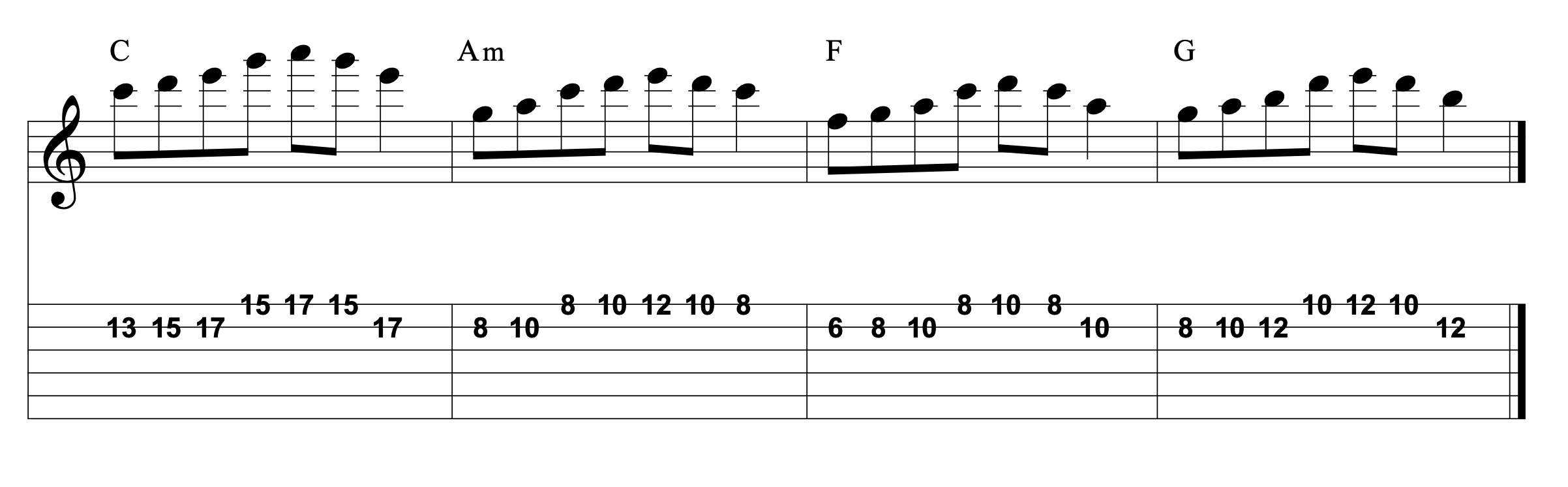
Higher registers naturally add intensity and excitement, which gives you more dynamic control over your solo. Also notice the diagonal movement of each pattern across the fretboard. This is incredibly helpful if you’ve ever felt trapped inside a single pentatonic “box.” Instead of staying put, you’re moving through positions in a way that connects the neck more musically.
Once you’re comfortable playing these patterns across multiple registers, the next step is improvisation.
Here’s an example of how that might look:
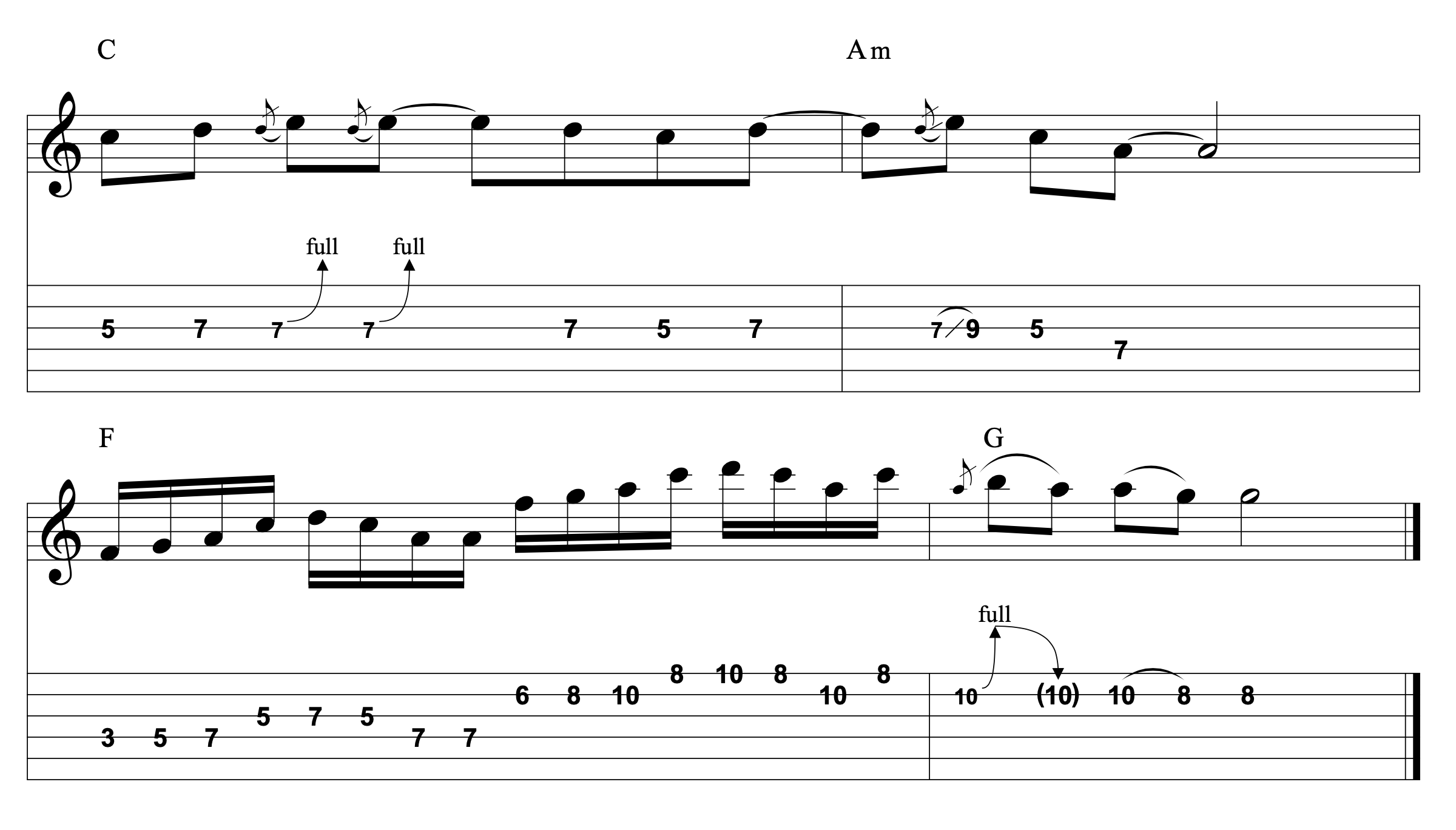
By changing the rhythm, adding bends and articulation, and using simple sequencing, the line now sounds like a real solo—not just a scale pattern. More importantly, it follows the chord changes. That’s what gives it direction and keeps listeners engaged.
A couple important points to keep in mind.
First, you don’t have to abandon the pentatonic box. You can return to it anytime, and it will still sound connected to the rest of your solo because everything you’re doing is built from pentatonics. That consistency isn’t always there when jumping between pentatonics and completely different scales or modes—those transitions can feel abrupt if you’re not careful.
Second, this isn’t a shortcut—it’s an approach. You do need to learn where the starting notes for each pentatonic pattern fall in different registers. That takes some time, but once it’s in your hands, it sticks. The easiest way to learn it is to apply the concept to songs you already play. Then expand into new keys and progressions as your repertoire grows.
This is just one way to approach improvisation, but it’s a highly practical one. Be sure to download the lesson. Spend some time with it, experiment across the fretboard, and you’ll find your solos start to follow the harmony more naturally—while still keeping that familiar pentatonic sound you already trust.